
For teams
Use VoLCA for a specific environmental workflow
When you need traceability, serious data handling, or self-hosted deployment, VoLCA can be packaged around a narrow use case instead of forcing a giant platform rollout.
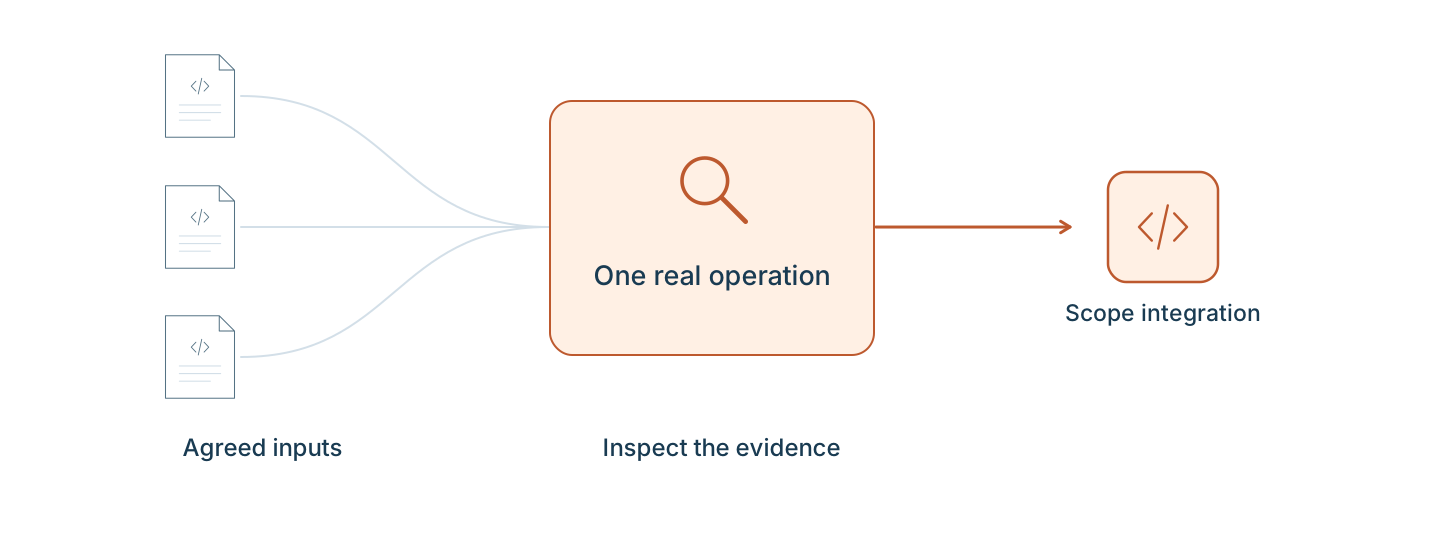
When VoLCA makes sense
Internal dataset inspection
Give a team a faster interface to inspect processes, trees, mappings, flows, and structural details in a serious environmental dataset.
Question-answering on a defined data scope
Help staff answer recurring environmental questions on a bounded dataset and method setup, with more traceability than a generic AI layer.
Private database exploration
Import internal or licensed databases and expose a controlled workflow for inspection, explanation, and evaluation.
Agent or API backend
Use VoLCA as the computation or inspection layer behind an internal assistant, technical workflow, or narrow application.
Self-hosted or controlled deployment
Run VoLCA where data control, licensing, procurement, sovereignty, or trust constraints make generic SaaS a poor fit.
Bounded pilot instead of vague transformation
Start with one concrete workflow and one concrete outcome, then decide from something real instead of from broad platform promises.
Good fit, bad fit
Good fit
- a narrow workflow with a clear user and clear value
- a real need for traceability or inspectability
- a defined dataset scope or data constraint
- a team that does not want to build the engine from scratch
- a hosted, managed, or self-hosted path with explicit boundaries
Bad fit
- "replace all our tools" without a narrow first step
- innovation theater with no real workflow owner
- unlimited custom development expectations
- vague AI enthusiasm without data or method clarity
- enterprise process before technical trust exists
How engagements usually start
1. Clarify the workflow
Define the actual problem, the data posture, the deployment constraints, and what success would look like for a first step.
2. Choose the right first format
Most relevant conversations lead to one of three next steps: a short scoping call, a paid discovery, or a fixed-scope pilot.
3. Decide from something real
The goal is to get to a concrete result quickly enough that you can decide whether deeper rollout or integration is actually worth it.
Typical deliverables
- a hosted prototype or bounded managed workflow
- a self-hosted or controlled deployment setup
- a narrow backend or API capability
- an inspection interface for a defined dataset scope
- structured outputs such as JSON, CSV, tables, or traceable answer flows
What teams usually care about
Traceability
Can we inspect where the answer or result comes from?
Data control
Can we work with licensed, internal, or sensitive datasets in a controlled setup?
Deployment realism
Can this be delivered as a narrow, usable capability instead of a giant all-or-nothing software project?
Discuss a use case
Use the short form below to describe the workflow, the relevant data constraints, and whether you mainly need a backend, a minimal viewer, or a fixed-scope pilot.
Best submissions usually include
- the exact workflow or recurring question
- the relevant datasets or data constraints
- whether you need hosted, managed, or self-hosted deployment
- what success would look like in the first 4-8 weeks