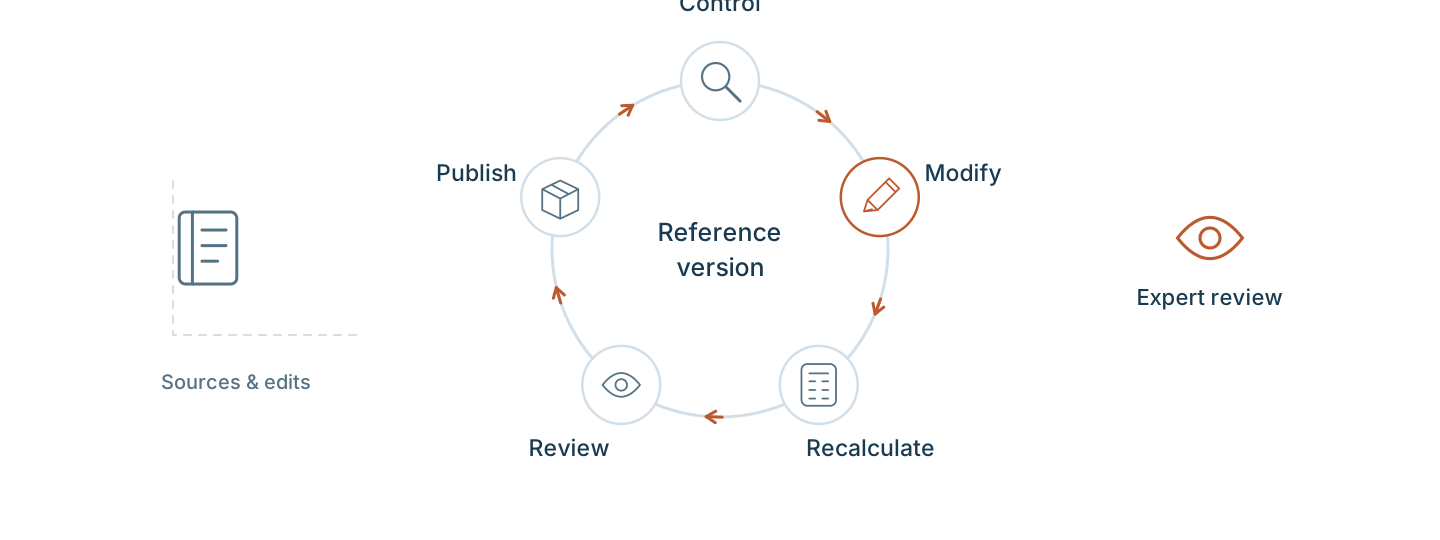
Start with a reference version. Make one deliberate change, examine its consequences, and prepare the material needed for review and release.
01 · Control
Check incoming data before integrating it
Inspect records, unresolved links, units and characterization coverage. Keep findings attached to the input version and the rules used.
Available building blocks: import, structural inspection and mapping diagnostics. Read the mapping audit guide and linked-database inspection example.
Integration to scope: run these checks in your CI and add your own acceptance rules. A successful import alone does not establish methodological validity.
02 · Modify
Correct a process without losing the starting point
Work on a writable copy, change a specific exchange and retain the source material and edit journal. Keep the reason for the correction with your review record.
Available building blocks: database editing and preserving source data and edited state.
Integration to scope: reviewer assignments, approval rules and your organization-specific change report. An edit journal is not by itself a complete collaborative review system.
03 · Recalculate
Understand the consequences across the database
Compute an agreed activity panel or the whole database with a pinned method and mapping configuration. Compare before and after, and examine failures as well as changed scores.
Available building blocks: batch scoring in the Ecobalyse export example and comparison against independent results in the BAFU numerical check.
Integration to scope: full-database coverage, change thresholds and release-blocking checks for your database. The published examples establish their stated workload, not automatic coverage of every database and method.
04 · Review
Give experts the material to make a decision
Bring together the changed records, inventory or impact differences, unresolved findings and calculation settings. Let reviewers inspect the evidence rather than only a final score.
Available building blocks: inspectable activity records, API outputs and the CSV and HTML comparison report example.
Integration to scope: connect these outputs to your existing review tools, access rules and approval process. Expert validation remains your responsibility.
05 · Publish and share
Deliver a version that others can identify and reuse
Export the approved data, retain the configuration and attach release metadata, checksums and validation reports. Share only what the data licences and your access policy permit.
Available building blocks: the checked multi-format export example and API access for downstream tools.
Integration to scope: your release catalogue, publication approvals, stable version addresses and sharing permissions. The export check demonstrates structural checks, not full round-trip equivalence or a ready-made institutional publishing platform.